
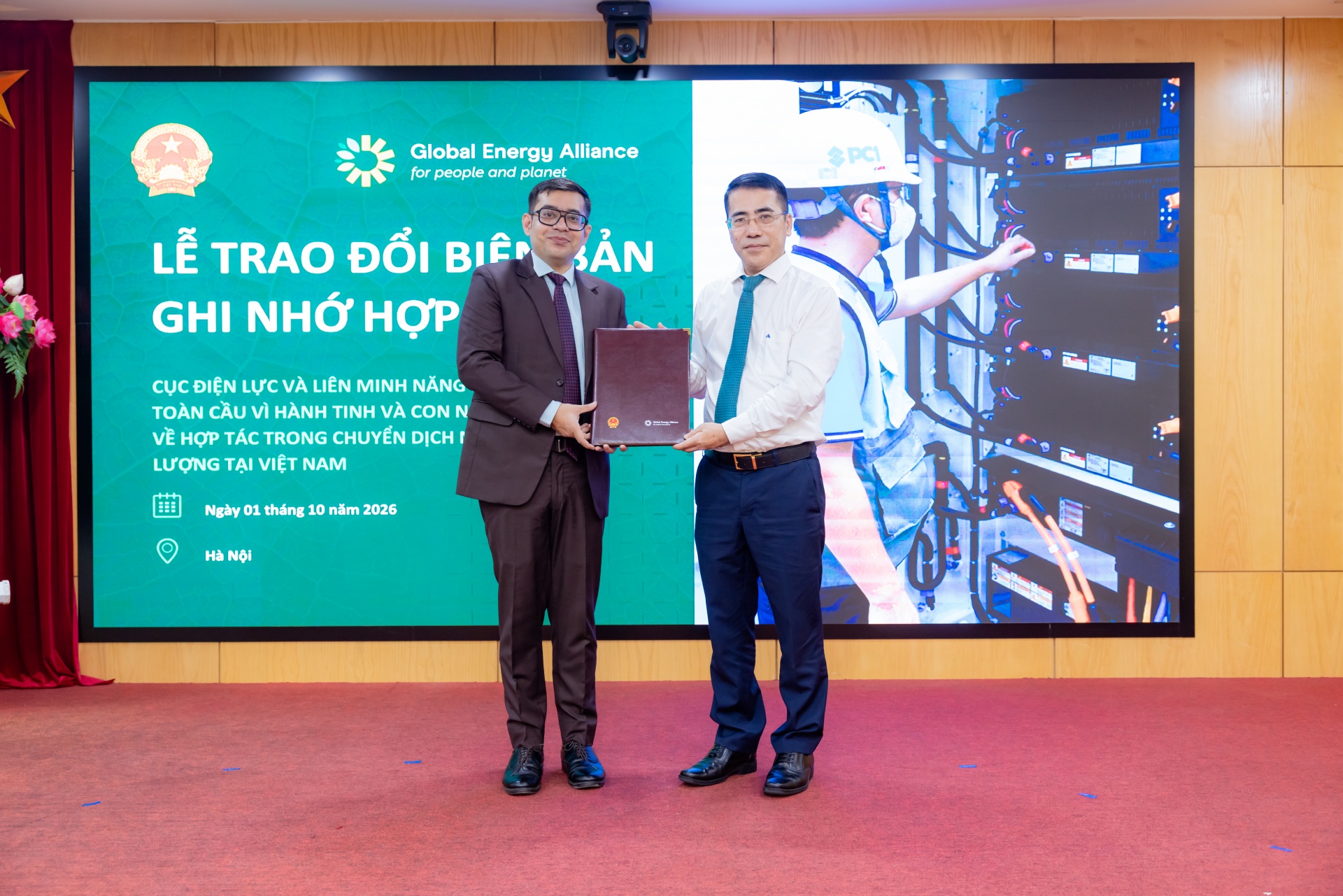
Photo: Global Energy Alliance
The meeting took place on October 1, following a media roundtable in Hanoi on September 30 where experts and development partners discussed the evolving requirements of Vietnam’s power system.
The task force meeting focused on translating the MoU into concrete work areas, including grid modernisation and digitalisation, improving system flexibility and reliability, knowledge sharing, domestic capacity building, and the development of Battery Energy Storage Systems (BESS).
Rapidly growing electricity demand, combined with the increasing share of renewable energy and distributed energy resources, is creating new requirements for how the power system is monitored and operated. Against this backdrop, the Global Energy Alliance presented ongoing work on a centralised energy management and scheduling platform for BESS at the meeting.
The platform enables the monitoring and optimisation of multiple BESS deployed across different locations and voltage levels. Based on grid operating conditions and signals such as electricity price forecasts, it can support decisions on when and how individual systems should charge and discharge.
This approach is intended to optimise the operational value and economic efficiency of distributed storage systems, while also providing additional information to support power system management and operations.
The platform represents a practical application of digital technology in energy storage management and can provide useful insights and experience for broader efforts to strengthen system visibility, improve operational flexibility, and support the effective integration of BESS into the power system.
“BESS is not just about hardware. As the number of storage systems grows, software, data, and coordination capabilities will play a significant role in determining how much value these systems can create for the grid,” said Biswarup Ghosh, global director, Grids of the Future, Global Energy Alliance for People and Planet.
Another key topic discussed at the meeting was the proposed establishment of BESS Centre of Excellence. The centre is envisioned as a platform for Vietnamese institutions, organisations, businesses, and educational institutions to learn from international experience and collaborate on capacity building and access to resources supporting energy transition efforts.
Under the proposed approach, the centre could serve as a hub for research, training, testing, knowledge, and experience sharing on energy storage technologies, building on technical work and stakeholder networks developed through earlier BESS activities. It could also support capacity building for regulators, utilities, businesses, universities, and research institutions in Vietnam.
The Electricity Authority of Vietnam (EAV) and its partners will continue discussions on the centre’s operating model, scope of functions, resources, and implementation roadmap to ensure that it responds to practical needs and the evolving requirements of Vietnam’s power system.
“The growing role of battery energy storage creates a need to strengthen local expertise among the agencies and organisations responsible for planning, managing, deploying, and operating these systems. The Centre of Excellence will provide a space to build expertise, share experience, and develop the capabilities Vietnam needs as BESS is deployed at increasing scale,” said Hoang Anh, programme director of Electrical Engineering, School of Electrical and Electronic Engineering, Hanoi University of Science and Technology.
In Vietnam, the combination of national-level dialogue, digital tools, utility-level applications, and domestic technical capacity building is creating a foundation for modern grid solutions to be tested, refined, and implemented in practice, paving the way for regional expansion.
“Modernising Vietnam’s power grid requires continued cooperation and technical coordination across the energy sector as the system integrates increasing amounts of renewable energy and new technologies. Through our cooperation with the Global Energy Alliance for People and Planet, we are jointly identifying practical priorities in areas such as grid digitalisation and battery energy storage systems, while strengthening the technical foundations needed to support implementation,” said Tang The Hung, deputy director general of EAV.
Beyond the priority areas outlined above, the EAV aims for the task force to continue exploring and proposing new cooperation initiatives based on Vietnam’s practical needs and the strengths of international partners. The objective is to ensure that the commitments under the MoU are translated into substantive activities with concrete outputs that support government agencies and businesses in implementation.
Battery storage prioritised as rooftop solar incentives under review
The government is preparing a new package of policies to accelerate rooftop solar development, while expanding investment in battery energy storage and studying time-of-use electricity pricing for large residential consumers as part of broader reforms of the country’s power sector.
ADB and GEAPP launch ENABLE platform to fast-track battery storage adoption
The Asian Development Bank (ADB) and the Global Energy Alliance for People and Planet (GEAPP) on June 12 announced a grant agreement to establish the Enhancing Access to Battery Energy Storage System (BESS) for Low-carbon Economies (ENABLE).
BESS poised to drive next phase of Vietnam’s energy development
After the boom in solar and wind power, Vietnam’s energy sector is entering a new phase of development, with Battery Energy Storage Systems emerging as a key focus.
