
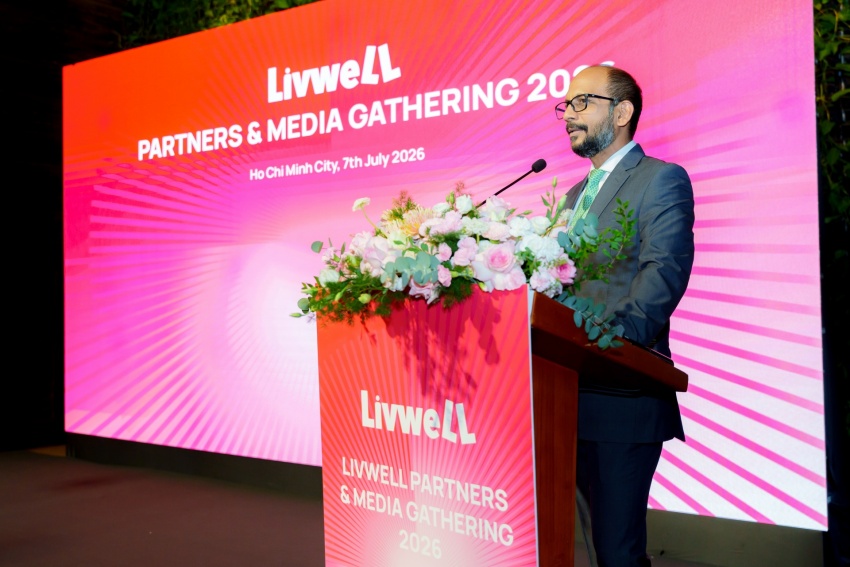
Balakrishnan Ambat, co-founder, Group CDO & CEO of LivWell Vietnam.
How have the priorities of Vietnamese businesses regarding employee health and wellbeing evolved over the past few years?
We’ve seen a real shift, from treating health benefits as a compliance cost centred on medical expense reimbursement, to treating employee wellbeing as a strategic investment tied to productivity, retention and business performance.
According to Ken Research’s Vietnam Corporate Wellness Market report, 60 per cent of Vietnamese businesses now say wellness initiatives are part of their strategic planning, evidence that wellness has moved from a peripheral perk to a budgeted priority.
Separately, PwC’s Global Workforce Hopes and Fears Survey 2025 (Vietnam highlights) found that 58 per cent of Vietnamese employees report fatigue and 40 per cent report financial stress, pressures that are pushing employers to look beyond traditional medical coverage towards more holistic support spanning physical, mental and financial wellbeing.
This is exactly the gap OneHealth’s expansion is designed to close: moving employers from a reimbursement-only model to a connected ecosystem of prevention, financial protection and long-term health support for their people.
In a rapidly evolving corporate healthcare market like Vietnam, what sets LivWell apart?
OneHealth is our flagship programme for employee benefits. What makes OneHealth different is the wellness layer added to traditional healthcare insurance. It brings health insurance, healthy lifestyle programmes and health-tracking tools into one connected experience, for the business and employees.
With OneHealth, we want organisations to build a healthier workplace where health is actively managed, and every employee receives appropriate support throughout their wellness journey. OneHealth acts as the Chief Wellness Officer for organisations and turns wellness-at-workplace into a culture.
In practice, that means we don’t treat employee wellbeing as a once-a-year benefit to be used only when something goes wrong. We treat it as a continuous journey that an employee moves through every day. With OneHealth, that journey runs from everyday habits and health tracking on the app, to proactive touchpoints like screenings and workplace wellness activities, to care and financial protection when it’s actually needed. Each stage connects to the next, so prevention, early detection and treatment support all sit on the same continuous path instead of being separate, disconnected benefits.
When investing in preventive healthcare and employee wellbeing, what tangible business outcomes or ‘rewards’ can employers expect?
Employers are right to ask for proof, not just goodwill. And the evidence is strong. A well-known Harvard analysis looked at decades of workplace wellness research. It found that for every dollar employers spend on wellness, medical costs drop by about $3.27. Absenteeism costs drop by about $2.73. This shows up directly on the bottom line.
We’re seeing the same discipline closer to home. Fortune reported earlier this year that Masan Consumer Holdings in Vietnam treats employee wellness as a real Profit and Loss line item. They review it every quarter. The same report cited Great Place to Work data: employees who feel their employer offers real benefits are 22 per cent more likely to stay. Employees who feel supported are 3.2 times more likely to go the extra mile.
So in concrete terms, employers can expect to see: lower absenteeism, lower medical claims costs over time, better retention and stronger engagement.
OneHealth is built to give employers that clear view: how the benefit is used, and whether it’s working.
What kind of solutions is this strategic alliance between LivWell, Insmart, and DiaB expected to bring to both employers and employees in Vietnam?
Each partner fills a different gap. The real breakthrough is connecting them into one journey. Claims tech and remote chronic care already exist in Vietnam on their own. What’s new is putting them in one place, so employees don’t need three logins and three vendors just to stay healthy and get help when something goes wrong.
InSmart covers the moment care is needed. Claims submission and benefit tracking now happen right inside the LivWell app. This speeds up reimbursement and removes a lot of paperwork. Employees can feel now their coverage is within their hands.
DiaB covers the moment before that. It brings remote consultations, personalised nutrition guidance, and chronic disease management. This helps us catch and manage issues, like diabetes-related conditions, before they turn into something bigger and more costly.
LivWell also signed strategic partnership agreements with Insmart and Diab to integrate insurance claims processing and policy benefits tracking directly into its application.
What major trends do you foresee driving the concept of workplace wellbeing and corporate healthcare in Vietnam?
The first trend is Vietnam’s ageing population, and the chronic disease burden that comes with it. Vietnam became an ageing society in 2015. The World Bank projects it will become a fully “aged” society by around 2036, one of the fastest transitions of its kind in the world. An older population means more heart disease, diabetes, and cancer, and these conditions cost far more to treat than acute, one-off care. People need to invest earlier, in prevention and protection, to keep healthcare and benefits costs manageable over time.
The second trend is building real engagement at work. Giving people access to a health plan isn’t enough. Employers need to actively build a culture that encourages healthier habits day-to-day. Gallup’s State of the Global Workplace 2025 points to what works: when managers actively coach and encourage their teams, employee “thriving” scores rise from 28 per cent to as high as 50 per cent. That’s the model we want workplace wellness to follow, active encouragement and daily engagement.
The third trend is that comprehensive wellness becomes the standard, not a bonus. Employees are starting to weigh health and wellbeing support the same way they weigh salary. Randstad’s Workmonitor 2026 report, based on a survey of over 27,000 workers across 35 markets, found 80 per cent of workers now prefer a role that actively supports their physical and emotional wellbeing. People want one complete package: physical, mental, and financial support together. Over time, we expect this kind of always-on wellness support to sit alongside salary and bonus to attract and retain talent.
Put together, these trends point to the same place we’re already heading with OneHealth: preventive program, real day-to-day engagement, and a complete package of support that employees expect as standard.
Nikhil Verma, CEO & co-founder of LivWell Holdings spoke about about OneHealth, powered by LivWell at the event.
Vietnam boasts huge growth potential for insurtech
Vietnam is poised for significant insurtech growth, driven by its modest insurance penetration rate and growing demand.
Vietnam’s life insurance industry to surpass $7 billion by 2030
Vietnam’s life insurance industry is projected to grow at a compound annual growth rate of 5.9 per cent, increasing from $6 billion in 2026 to $7.2 billion by 2030 in terms of gross written premium, according to a report by GlobalData on April 15.
